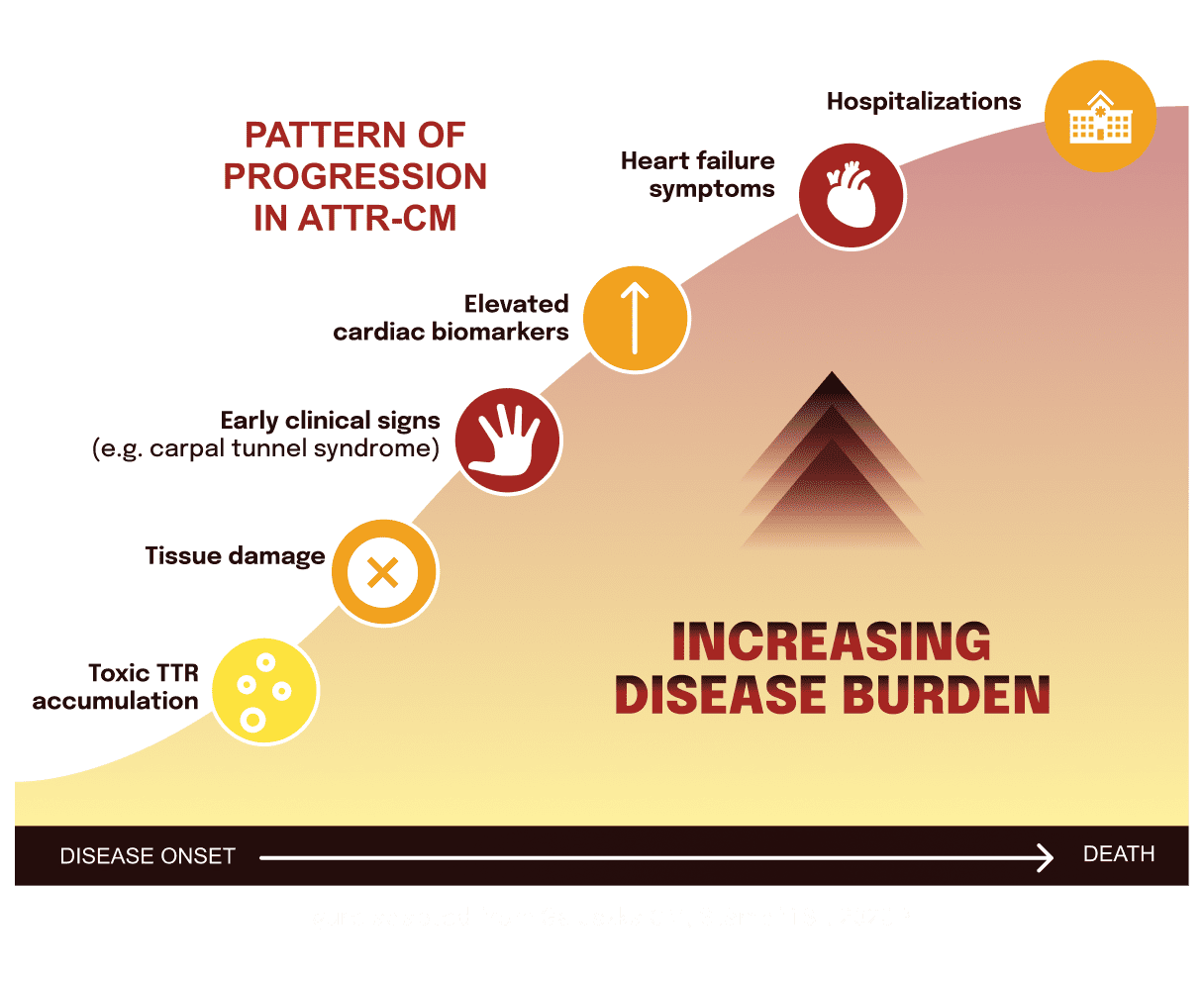

In ATTR-CM, TTR protein misfolds and becomes toxic5,6
Toxic misfolded TTR* accumulates as amyloid fibrils, which infiltrate the heart and other tissues1,5
Relentless production and deposition of toxic misfolded TTR fibrils results in progressive tissue damage and organ dysfunction and, ultimately, death1,5
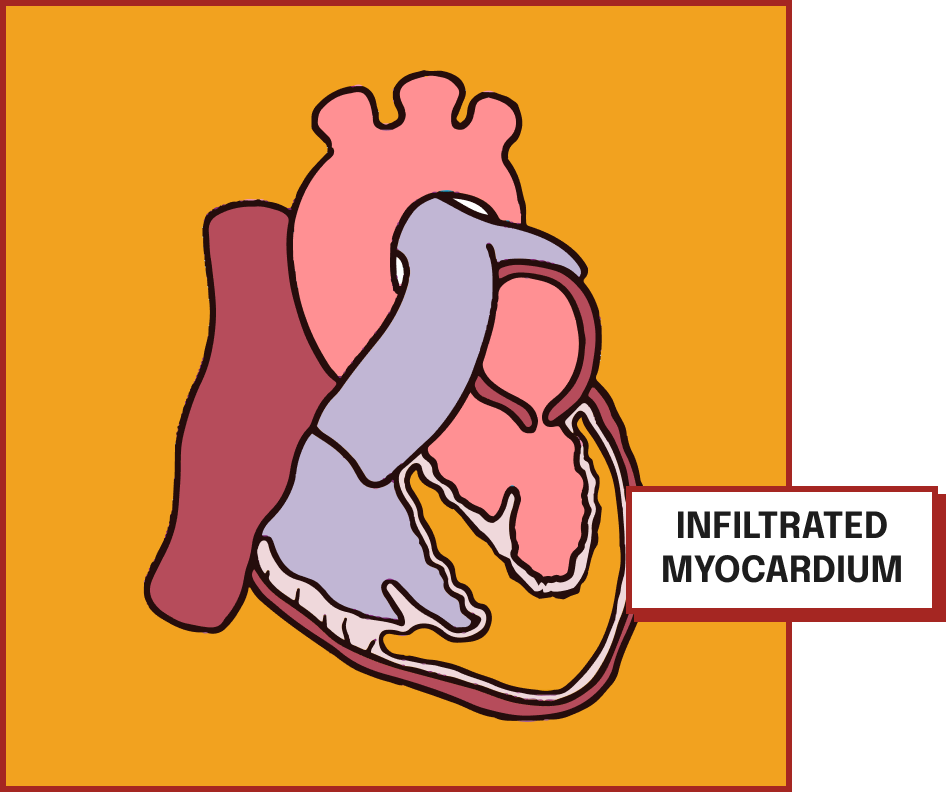
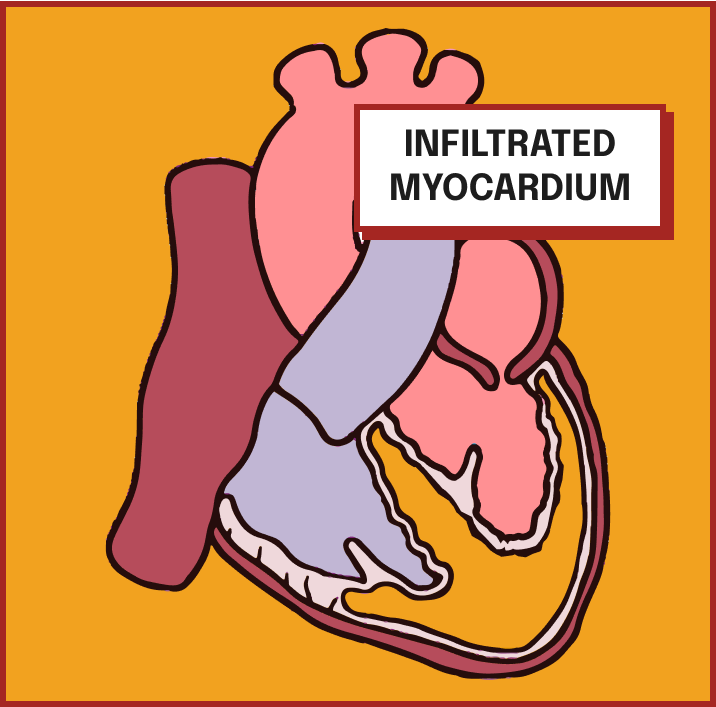
Toxic misfolded TTR deposits can accumulate in the extracellular space of the myocardium, causing hypertrophy and stiffness, which can result in a restrictive physiology and diastolic dysfunction5,7
These changes can manifest clinically as heart failure5,7
*Toxic TTR refers to the misfolded TTR proteins in patients with ATTR-CM which aggregate into amyloid fibrils, causing multisystemic deposits.5,6


Life expectancy for patients with ATTR-CM is
2–6
YEARS
from the point of diagnosis1
Diagnosis is often delayed by as much as 6 years from symptom onset due to lack of awareness, even with hallmark signs and symptoms and clear diagnostic guidelines2,4
- Diagnostic delay can result in late initiation of specific treatments for ATTR-CM2,4,8
- Early initiation of these treatments is vital for patients to derive the greatest benefit from them and stop or delay further progression of disease2,4,8